


I have prepared the list of 15 books translated from various languages that can help you diversify your reading experience. I hope this list will be of use.
1 FRENCH: I Who Have Never Known Men by Jacqueline Harpman


I Who Have Never Known Men is a dystopian novel written by the Belgian author, Jacqueline Harpman, a Belgian author, originally published in French in 1995 under the title “Moi qui n’ai pas connu les hommes”. I Who Have Never Known Men is notable for its introspective, philosophical and thought-provoking exploration of human nature under extreme circumstances in a dystopian setting. The book raises philosophical questions about solitude, freedom, self-discovery, human condition, identity, womanhood, female body, intimacy, euthanasia, individualism, suffering, aging, degenerative illnesses, the attitude of resignation towards life and the attitude of constant curiosity and independent thinking, the concept of humanity as the need for understanding, and the consequences of isolation. The ambiguous and enigmatic nature of the narrative adds to open interpretation of the underlying meaning of the book. The narrative centres around forty women including the youngest one who narrates the story. The women were kept in the underground bunker. They lived in the cage underground and no woman could hide from the other women. They have been kept in the bunker for years, “reduced to utter helplessness, deposed, deprived even of instruments with which to kill [themselves], defecating under the full glare of the lights, in front of the others, in front of them.” None of the women knew what they were kept there for and why they were kept alive. In the bunker, they spent 15 or 20 years during which they became accustomed to this strange way of living. As the story unfolded the women grappled with their limited understanding of the world outside the bunker and events surrounding their existence. I Who Have Never Known Men has become one of my favourite books I have ever read. The multilayered narrative poses so many questions and leaves the reader reflecting on them for a long time after finishing the book. I highly recommend this novel. It provides the reader with a profoundly rich experience. BOOK REVIEW
2 SWEDISH: The Details by Ia Genberg


The Details by Ia Genberg is a very compelling, subtle and nuanced reflection on the meaning of relationships with others, memories of those who have departed our life, connection between the objects and memories, boundaries between our perception of the past, memories and how one remembers people who are no longer present in one’s life, how we measure people we meet against those we once knew, how we remember people who touched our lives, whether we should hold on to the memories and whether our memories of those who departed are somehow too polished due to the passage of time? Told in the portraits of four people present at different stage in the unnamed narrator’s life, The Details is a portrayal of a singular life presented through the lenses of the lives of people who entered the narrator’s life at some point but are no longer part of it. Depiction of these four characters remains close to everyday life and in some way The Details constitutes an ode to the ordinariness. BOOK REVIEW
3 TIBETAN: Flowers of Lhasa by Tsering Yangkyi


“People change over time. People’s lives, and loves, are ever shifting, never permanent. But everyone has one goal that never changes: the pursuit of that word “happiness”. Everyone has the right to pursue a happy life, and no matter what people do to pay the bills, it’s always a happy life they’re striving after.” By portraying the traumas of young women at the start of their so called best years who are trying to find their place in the world, Flowers of Lhasa by a Tibetan writer, Tsering Yangkyi, offers a compassionate image of fragile lives marred by lack of opportunities, poverty, and resignation.Flowers of Lhasa is a powerful tale of four young women, migrant workers : three Tibetans, and one Chinese, who leave their close-knit rural communities behind to look for a better life for themselves and to support their impoverished families in the city of Lhasa, a religious and cultural capital of Tibet. The titled ‘flowers of Lhasa’: Drolkar known as Dahlia, Xiao Li known as Cassia, Yangdzom known as Azalea, and Dzomkyi known as Magnolia live in a small rented room, their temporary shelter, their home where they share their joys and sorrows. They are like a family and always look out for each other. BOOK REVIEW
4 ARABIC: What Have You Left Behind? Voices From A Forgotten War by Bushra Al-Maqtari


A Yemeni writer and journalist, Bushra Al-Maqtaricollected over 400 firsthand accounts to document the nearly decade-long Yemeni Civil War. She chose 43 witness testimonies to include in this book. She also provides a list of every victim she was told about by their families during her collection of the testimonies and her own research during the period between 26 March 2015 and 29 September 2017. Bushra Al-Maqtari gives us not a politicised or sanitised version of war. She does not choose sides alternating between testimonies from the victims of the Saudi – led coalition and testimonies from the victims of the Houthi militia. BOOK REVIEW
5 SPANISH: The Halfway House by Guillermo Rosales

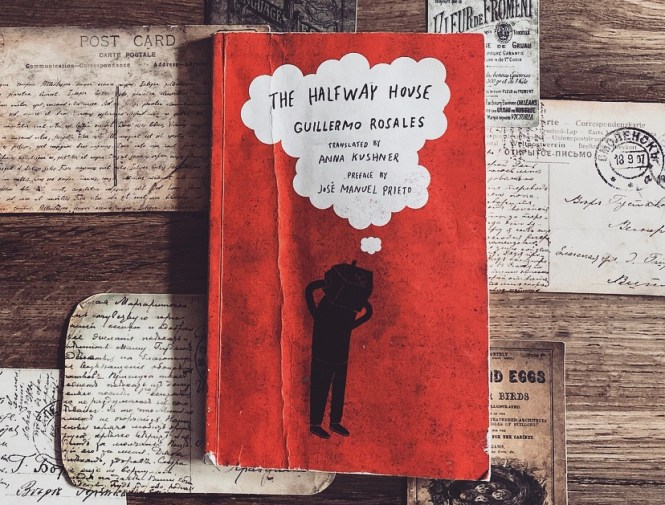
The Halfway House is a haunting exploration of darkest corners of human nature and the tragic impact of the communist totalitarian regime on the Cuban people, and on the ones who managed to flee the regime: political exiles. This book is a truly timeless, frontierless masterpiece and shines the light on the evils of the totalitarian regime in a way that only a few books were able to express. It is as impactful as Solzhenitsyn’s or Herling-Grudzinski’s or Shalamov’s books. The degradation of human nature illuminated by Rosales also reminds me of Tadeusz Borowski’s This Way to the Gas Chambers, Ladies and Gentlemen, Tahar Ben Jelloun’s This Blinding Absence of Light and Ken Kesey’s One Flew Over the Cuckoo’s Nest. The portrayal of the human condition in all these books including the Halfway House is bleak, showing the worst aspects of humanity. In The Halfway House we follow Guillermo Rosales’s alter ego, William Figueras, a victim of his unfortunate circumstances and times during which he lived. We find out that William’s book was suppressed by the regime in Cuba, and it had a degrading impact on his life. He arrives in Miami 20 years later dejected, beaten by the life and circumstances. William was a “toothless, skinny, frightened guy who had to be admitted to a psychic ward that very day”, so-called the halfway house. He had a history of mental illness (similarly to Rosales) and is placed in the home for people suffering from mental illness – the halfway house located somewhere in Miami. BOOK REVIEW
6 HUNGARIAN: Katalin Street by Magda Szabo


Katalin Street by the Hungarian writer Magda Szabo was originally published in 1969. This story explores the issues of historic trauma, living with guilt, heavy sorrow, grief wrapped up in solitude and existing in a constant survival mode. This novel also tackles the irreversibility of our actions, emotions and feelings. Life in the novel is presented as one with no illusions for better future. Katalin Street is a tale of human existence conditioned by the history, its aftermath and how one’s moral judgments, systems of values and memories change with the passage of time. Reflections on the meaning of home and on the impact that the given place can have on one’s life also constitute an important part of this novel’s narrative. The novel follows the interlinking fates of three families in Budapest living in Katalin Street during pre-WWII and during the WWII: the Temeses, the Elekeses, and the Helds who were Jewish. Magda Szabo takes us on a journey through different times between 1934 and 1968 related to the major events in the history of Hungary throughout the 20th century: pre-war Hungary, the Nazi German occupation and the communist authoritarian dictatorship imposed after the war. Those who survived the war live their days with various degrees and sources of grief, deeply traumatised by the past as well as the present-day. They are exhausted by growing old, trauma of the past and being“haunted by the sense of being somewhere else”. BOOK REVIEW
7 TURKISH: 10 Minutes 38 Seconds In This Strange World by Elif Shafak

The tale of Leila, the main protagonist of the book, celebrates the diversity of life in its complexity and works like a calming balm for my own emotions. We know from the first sentences that the main character, Leila, is dead. At the time of her death, she is in her 40s and has worked as a prostitute in Istanbul. We find out at the very beginning of the book that Leila was brutally murdered, and her body was dumped in the garbage bin as a finalinsult to her humanity. Although Leila’s heart stopped beating, her brain is still working. As Leila remembers the important moments from her life during these few minutes, we take on a journey through her lifeand also through the story of her homeland, Turkey.As we travel with Leila, we listen to the stories told through the eyes of the outsiders, people from the peripheries of the society including Leila herself and her ‘water family’ consisting of her friends. BOOK REVIEW
8 CHINESE: Stories of the Sahara by Sanmao


Sanmao belongs to the 20th century most iconic women. She was a writer, traveler, and university teacher born in China in 1943 and then raised in Taiwan. As an adult she travelled extensively across Spain, Germany, Central America and spent a few years living in the Western Sahara where she closely observed the native Sahrawi culture. Stories of the Sahara provide a unique insight into Sanmao’s and her husband, Jose’s life mainly in Western Sahara during the 1970s. Since its publication this book has captivated and inspired millions of Chinese readers for decades. It offers an interesting perspective of North Africa from a non-Western female traveller’s view. We learn about Sanmao’s life in the desert, her beautiful relationship with her Spanish husband. Through her words we witness a free spirit of Sanmao, her lust for adventure and refreshing wondrous curiosity of the world around her. BOOK REVIEW
9 RUSSIAN: Lucky Breaks by Yevgenia Belorusets

This series of short stories, originally written in Russian and published in 2018 and first translated into English in 2022, explores the lives of Ukrainian women, displaced, forced to seek refuge in other parts of Ukraine as a result of the war in Eastern Ukraine which started in 2014. Some stories take place in Kyiv, some in a warzone, and others in the territories occupied by the Russia-backed separatists. All these snapshots of a singular life presented in those stories focus on how traumatic historical events transform one’s everyday life, how military and political turmoil upends the lives of the ‘ordinary’ women who endured so many senseless losses. We get a glimpse into what’s now and what’s been. The book centres on women – women from all walks of life, all backgrounds, all ages, women whose age is difficult to decipher because “they are young but tired (…), they can be mistaken for someone twenty years older”. Many of the protagonists are painfully lonely in their despair to rebuild their lives in Kyiv and other parts of western Ukraine, longing for relationships, love but often sticking to their wartime habits. Their daily existence amounts to the mere survival in the ruins of war, being displaced and out of place, without social network, with no social status, with no ability to articulate profound trauma that penetrates every aspect of their lives. BOOK REVIEW
10 ITALIAN: Whereabouts by Jhumpa Lahiri

Whereabouts was originally written in Italian by the Bengali-American writer, Jhumpa Lahiri who also translated the book herself. Written in forty-six short vignettes, Whereabouts portrays daily wanderings and inner workings of the narrator’s mind who is a solitary unnamed woman in her mid -40s working as a teacher and living in the unnamed city in Italy. Whereabouts is an exploration of urban solitude, alienation, loneliness, growing old, with the narrator’s beautiful ruminations and perceptive thoughts infused with a profound sense of nostalgia veiled in gentle melancholy, on the meaning of living a solitary life, inspired by the locations of daily errands. The narrator is a very sensitive and astute observer of other people’s words, emotions, and gestures. She often reflects on how we cross our paths with others on our daily errands, often without exchanging any words, often just having the presence of other person as a reference point. The narrator often thinks about people who currently frequent or might have frequented the same places that she does. BOOK REVIEW
11 HEBREW: The Teacher by Michal Ben Naftali


The Teacher tells a story of a woman, Elsa Weiss, born in 1917, a Holocaust survivor from Eastern Europe who after WWII ends up living in Israel working as a high school teacher until she commits suicide in 1982 at the age of 65. It is a story shared by many Holocaust survivors – I read that the author of the book based Elsa’s life on the person she knew in her real life. It is a story of a survivor whose name is not recorded in any history book, nor in any journal nor memoir; a story of those whose life faded from the living memory, of those with no photos of their faces preserved for the future generations; of those who were busy surviving in a new country, busy assimilating, existing, moving forward; of those who are invisible to others; of those without possessive determiners on their grave’s inscription: they are no one’s mother, father, sister or bother; of those who do not wish to be remembered. The Teacher is an intense exploration of trauma, survivor’s guilt, loneliness, finding one’s place in the world, learning how to exist or rather just how to survive, the memory and how we perceive and remember people in our life. Elsa Weiss is an enigma, her life is an enigma – she left no trace of her life for others to explore. BOOK REVIEW
12 KOREAN: The Disaster Tourist by Yun Ko-eun


The Disaster Tourist offers a thoughtful take on the issues of abuse, exploitation, and predatory behaviour in a workplace, the meaning of one’s professional life versus personal life, dark tourism versus responsible tourism, and perception of the Other in the disadvantaged communities and how one digests news about human tragedies. The story evolves around Yona who have been working for ten years as a programme coordinator for a Seoul-based travel company called Jungle specialising in holiday packages to the destinations affected by natural disasters. On the verge of losing her job, Yona is offered to take a trip to Mui, an island near the Vietnamese shore to review the destination and asses its profitability. She discovers the attempt to fabricate the disaster by the resort just to keep the destination profitable for the travellers. BOOK REVIEW
13 ROMANIAN: For Two Thousand Years by Mikhail Sebastian


For Two Thousand Years by the wonderful Romanian Jewish writer, Mihail Sebastian (1907 – 1945) was first published in 1934 causing a lot of controversy. It portrays a rise of antisemitism among the members of society, including artists, writers, teachers, politicians.N one was immune to bigotry. It is heart wrenching how easily the acts of violence towards Jewish members of the society were accepted as a norm. The protagonist, a Jewish student, learns that his oldest friends are in fact anti-Semites, that he is not really considered a Romanian by them. He is not allowed to define his own identity; others do it for him. This book depicts the danger of using language to scapegoat one group of people and how reductionist definitions of belonging, race, ethnicity and religion fire up racist and xenophobic attitudes. For Two Thousand Years covers the period of around ten years between 1924 and 1934. It shows how words, language, not speaking up, indifference and lack of empathy can lead to the unimaginable atrocity. This book constitutes a multifaceted exploration of national identity and belonging to the place where one is always perceived as ‘The Other’.
14 GERMAN: Marzahn, Mon Amour by Katja Oskamp


Marzahn, Mon Amour by the German writer, Katja Oskamp beautifully translated by Jo Heinrich is a novel based on the author’s own life experiences. It tells a story of a woman in her mid-40s who after her novel was turned down by twenty publishers leaves her career as a writer to retrain as a chiropodist in the suburban borough of Berlin called Marzahn created in the 1970s which is known for the high-rise Communist blocks of flats. Marzahn explores the meaning of ageing, the importance of close-knit community, human touch, the need for warmth, affection as well as of small daily gestures of kindness. It serves as a reminder that ordinary lives often marked by brutal historical and political events are deeply meaningful. This novel presents a piece of German history through the observations of singular lives at the very basic human level. BOOK REVIEW
15 POLISH: The Map by Barbara Sadurska


The Map is a collection of seven stories connected by one object, the Map along with a number of various artifacts. Barbara Sadurska has demonstrated in her book an extraordinary ability to present the complexities and nuances of the human existence. The Map offers the interpretation of the world like no other book I have recently read. This is a wonderful literary achievement delivered in the fascinating style that deserves more recognition. The Map is like a puzzle; it must be read in the reference to history and cultural events. The reader is taken on an intriguing voyage through centuries and diverse lands of Europe and must make sense of the snapshots of history and slices of lives presented in the book. There are countless layers of meanings in The Map to uncover, and so many subtle details that can be easily missed on the first reading. The essence of The Map by Barbara Sadurska is an exploration of human nature, its evil side. Times pass, new people come along but human nature remains the same, people are still subject to acting on its darkest and primal instincts. The Map offers bitter, unfiltered truths about ourselves, and the ugly vision of the world. The eponymous map is a link between people and generations, it goes from one person to another, often to random people influencing their destiny in some way and it imprints its mark on their existence. BOOK REVIEW